In This Article
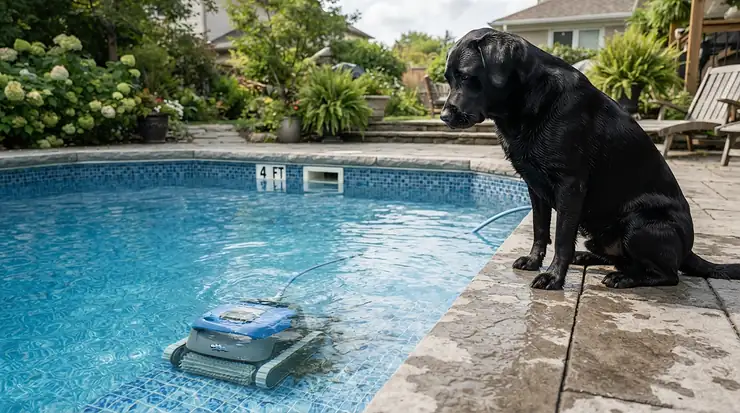
If your dog treats the deep end like a personal spa, you already know the aftermath. A floating tumbleweed of fur drifts toward the skimmer, and a fine, felted mat settles across the floor. Choosing a robotic pool cleaner for pets with hair in the pool isn’t about raw power. It’s about filtration, brush design, and how fast the filter jams once the fur starts flowing.
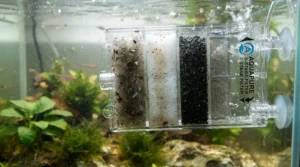
Pet hair is a strange kind of debris. Each strand is thin enough to slip through coarse mesh, yet long enough to snag, braid, and wrap around anything that spins. Most standard baskets use 180-micron mesh, and as one robotic cleaner filter guide explains, a finer cartridge is what stops a robot from leaving “a little of everything” behind.
I’ll be upfront about how this article works. I haven’t tested these machines in a backyard, and I won’t pretend otherwise. What follows is a spec-by-spec analysis, built from manufacturer documentation, editorial test results, and the recurring themes in owner discussions. Where the evidence is thin, I’ll say so.
Here’s what you’ll get: seven real models across budget, mid-range, and premium tiers. You’ll also get plain-English guidance on micron ratings, brush entanglement, and the filter clogging that quietly kills suction.
Quick Comparison: 7 Robots Built (or Suited) for Pet Hair
| Product | Power | Hair-Relevant Spec | Best For |
|---|---|---|---|
| Dolphin Nautilus CC Plus | Corded | 70-micron ultra-fine filter (Wi-Fi version) | In-ground pools, mid budget |
| Aiper Seagull SE | Cordless | Floor-focused cleaner; filter rating unconfirmed | Flat-bottom pools, tight budget |
| Aiper Scuba S3 | Cordless | 180-micron basket plus 3-micron ultra-fine filter | Mixed fur, silt, and pollen |
| Beatbot Sora 30 | Cordless | 6,800 GPH suction, 6.7-inch inlet | Clumped hair on the floor |
| Dolphin Quantum | Corded | NanoFilters and an oversized basket | Heavy, frequent swimmers |
| Dolphin Premier | Corded | Multi-media filters, waterline cleaning, swivel cable | Mixed debris, large pools |
| Beatbot AquaSense X | Cordless | 9L basket, automatic filter-cleaning station | Hands-off maintenance |
Read this table as a filter-first shortlist. The two corded Dolphin premium models and the Aiper Scuba S3 lean hardest on fine filtration, which matters most for suspended fur. Beatbot Sora 30 takes the opposite route, using a wide intake to pull in clumped hair rather than relying on mesh alone. And Aiper Seagull SE is the budget gamble, so confirm its filter details before you buy.
💬 Just one click — help others make better buying decisions too!😊
Top 7 Robotic Pool Cleaners for Pets with Hair in the Pool: Expert Analysis
Prices below are ballpark tiers, not quotes. They shift constantly, so check current price on the retailer’s page.
1. Dolphin Nautilus CC Plus — fine filter at a mid-range price
The Dolphin Nautilus CC Plus matters here because its Wi-Fi version lists a top-load ultra-fine filter rated to 70 microns. That is a finer screen than the 180-micron standard.
In practice, a 70-micron screen has a real shot at the thin strands that sail through ordinary baskets. Top-loading means you lift, rinse, and re-seat the filter without touching the muck, which is a genuine perk after a hairy swim.
Be careful with versions, though. Maytronics describes the Wi-Fi model’s ultra-fine filter, while some reviewers describe the standard mesh as the included option. Confirm what’s in the box before ordering.
On paper, it suits households with one or two moderate shedders and a standard in-ground pool. The Pool Nerd’s review cautions that it lacks waterline cleaning and only partially climbs walls, so floating fur at the waterline will still need a net. Bob Vila’s testers, by contrast, named it their best overall pick.
Pros:
- ✅ Ultra-fine filtration available at 70 microns
- ✅ Top-load filter keeps your hands clean
- ✅ Simple plug-and-play operation
Cons:
- ❌ No waterline cleaning
- ❌ Only partial wall climbing
Pricing sits roughly in the $600-$900 range depending on Wi-Fi and bundle. That is a fair value for fine filtration, provided you accept the waterline gap.
2. Aiper Seagull SE — cheapest way to cut the cord
The Aiper Seagull SE is the budget entry. Bob Vila’s testers called it the best bang for the buck, and other reviewers single it out for flat-bottomed pools.
Cordless means no cable to snag on a dog’s paddling legs, and no rubbing against a wet retriever. It also means no wrestling a heavy power supply out of the shed.
Now the honest caveat. I couldn’t confirm this model’s filter micron rating from the sources I found, and budget cordless baskets often sit near the 180-micron standard. That is where pet hair gets borderline.
My analysis: it’s a sensible choice for a small, flat pool where your dog swims occasionally, and where you’ll skim the surface separately. It’s a poor pick for a husky in full coat-blow.
Reviewers’ praise centers on simplicity and value rather than hair performance specifically, so treat any hair claim as unproven.
Pros:
- ✅ Cordless design avoids cable tangles
- ✅ Strong editorial value ranking
- ✅ Light, easy lifting for small decks
Cons:
- ❌ Fine-filter rating unconfirmed
- ❌ Floor-focused, so waterline hair stays put
Pricing falls in the budget tier, likely under $500, and the value verdict is good only if your pool is flat and your dog sheds lightly.
3. Aiper Scuba S3 — dual-layer filter for fur plus silt
The Aiper Scuba S3 pairs a 180-micron basket with a 3-micron ultra-fine filter, according to a published review, and lists waterline scrubbing.
That combo is the smart way to handle fur. The coarse basket grabs clumps and leaves, while the fine layer catches the suspended strands that cloud the water after a swim.
A 3-micron filter is also finer than most owners need, so it will clog faster. Use it when the water looks hazy, then swap back to the basket for routine runs.
Reviewers behind older siblings, including the Aiper Scuba S1 and X1, scored well at Bob Vila and Forbes. Independent coverage of the S3 itself is thinner, so I’d weigh the filter spec more than the praise.
It suits mid-size in-ground pools with a dog that swims several times a week.
Pros:
- ✅ Two filtration layers for mixed debris
- ✅ Waterline scrubbing listed
- ✅ Cordless, with no cable to tangle
Cons:
- ❌ 3-micron media clogs faster
- ❌ Limited independent testing so far
Pricing is upper mid-range, likely approaching $1,000-$1,500. It’s good value if you’ll actually use both filter layers.
4. Beatbot Sora 30 — wide intake for clumped hair
The Beatbot Sora 30 takes a different angle. Beatbot says it delivers 6,800 GPH suction through an extended 6.7-inch inlet, and the brand argues that wider intake gives clumps of hair room to enter rather than get shoved around.
That logic is sound. A wide mouth helps with matted hair, which is the debris that often wraps brushes and stalls smaller inlets.
Note the source, though. Those specs and the dog-hair claims come from Beatbot’s own buying guide, so treat them as manufacturer claims rather than independent results.
Where it fits: pools with a dog that sheds in tufts rather than fine dust. Pair it with a net for surface fur.
I couldn’t verify enough independent owner feedback on dog hair for this specific model, so I won’t invent any. Check recent buyer reviews filtered for “dog” or “hair” before committing.
Pros:
- ✅ Very strong rated suction
- ✅ Wide inlet handles clumps
- ✅ Cordless convenience
Cons:
- ❌ Dog-hair claims are brand-sourced
- ❌ Standard filter may need a finer upgrade
Pricing is mid-to-upper, roughly $700-$1,200. It’s good value for clumpy, heavy hair.
5. Dolphin Quantum — big basket for heavy shedders
The Dolphin Quantum sits in the Max-Series and, per retailer Poolbots, in the ProLine too. Dealers recommend it for pet hair thanks to NanoFilters and a large basket.
A bigger basket isn’t a luxury when you own a double-coated breed. It simply takes longer to fill, so suction holds steady through the whole cycle.
Caution: the pet-hair endorsement comes from dealers, who have a sales interest. The underlying spec, a large basket plus NanoFilters, is still the right design logic.
Based on the spec comparison, this is my pick for households where the dog swims daily. Corded power also means no battery fade partway through a long cycle.
The trade-off is the cord. A good swivel prevents tangling, but you’ll still manage a cable around the deck.
Pros:
- ✅ NanoFilters for very fine debris
- ✅ Oversized basket resists early clogging
- ✅ Consistent corded power
Cons:
- ❌ Costs well above entry-level robots
- ❌ Heavier to lift out
Pricing is premium, above $1,000. It’s worth it if hair volume is high.
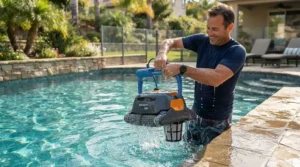
6. Dolphin Premier — most filter options in one machine
The Dolphin Premier is the Swiss Army knife. Poolbots notes it ships with an oversized leaf bag plus fine and ultra-fine cartridges, and its retail listing adds a patented anti-tangle swivel cable and a full-filter indicator.
Mixed debris is the point. Fur plus oak leaves plus pollen is a nightmare for one-size filters, so swapping media is a real advantage.
A retailer page lists it for in-ground pools up to 50 feet, and the same page shows a 4.0 average across just 35 ratings. That’s a small sample, so don’t over-read it.
The full-filter indicator is quietly useful. It saves you from guessing when a hair-heavy cycle has throttled suction.
It suits big pools, big dogs, and owners who want to stop thinking about filters.
Pros:
- ✅ Multiple filter media options
- ✅ Waterline cleaning included
- ✅ Anti-tangle cable and full-filter light
Cons:
- ❌ Premium price tier
- ❌ Corded setup needs deck management
Pricing is premium, above $1,000, often well above. Value is highest for mixed, heavy debris loads.
7. Beatbot AquaSense X — filter cleans itself
The Beatbot AquaSense X attacks the biggest hair problem: maintenance. Beatbot lists an extra-large 9L filter basket and an AstroRinse station that automatically cleans the filter.
For dog owners, that could be a quiet revolution. Hair-laden filters are the dirty chore people skip, and skipped chores become clogged filters.
Again, these are manufacturer specs, not independent tests. The sibling Beatbot AquaSense 2 earned strong marks from Bob Vila, which is encouraging but isn’t proof about this model.
It fits owners with a busy schedule, a dog that swims often, and a budget for premium conveniences. A 9L basket also delays full-basket warnings.
Pros:
- ✅ 9L basket for heavy loads
- ✅ Automatic filter-cleaning station
- ✅ Cordless freedom
Cons:
- ❌ Premium price and extra station footprint
- ❌ Independent testing still limited
Pricing is premium, above $1,000. It’s worth it mainly if you hate cleaning filters.
Top 7 Specs at a Glance
| Product | Price Tier (Ballpark) | Filtration Highlight | Independent Signal | Best For |
|---|---|---|---|---|
| Dolphin Nautilus CC Plus | $600-$900 range | 70-micron ultra-fine (Wi-Fi version) | Bob Vila best overall pick; Pool Nerd urges caution | Moderate shedders |
| Aiper Seagull SE | Budget, likely under $500 | Unconfirmed | Bob Vila best bang for the buck | Small flat pools |
| Aiper Scuba S3 | Roughly $1,000-$1,500 | 180-micron plus 3-micron | Limited S3 testing | Mixed fur and silt |
| Beatbot Sora 30 | Roughly $700-$1,200 | 6.7-inch wide inlet | Brand-published specs | Clumped hair |
| Dolphin Quantum | Above $1,000 | NanoFilters, large basket | Dealer-recommended | Daily swimmers |
| Dolphin Premier | Above $1,000 | Multi-media filters | 4.0 across 35 retailer ratings | Large mixed-debris pools |
| Beatbot AquaSense X | Above $1,000 | 9L basket, auto rinse | Brand-published specs | Low-maintenance owners |
The pattern is clear: fine filtration climbs with price, but the cheapest route to fine filtering is the Dolphin Nautilus CC Plus. If clumps are your main worry, Beatbot Sora 30 is the oddball worth a look. And if you want filter care automated, the Beatbot AquaSense X is the only one here that tackles that chore directly.
✨ Don’t Miss These Deals Before Shedding Season!
🔍 Take your pool-cleaning routine to the next level with these carefully selected robots. Click any highlighted product to check current pricing and availability. A little planning now means a clear, hair-free pool for the whole family — and a very happy dog!
Practical Guide: Setting Up Your Robot for a Dog-Friendly Pool
Most hair problems are routine problems. A few habits early on prevent months of frustration.
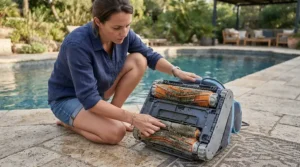
Week one: run the robot after the dog’s swim sessions rather than before. Fur sinks slowly, so let it settle for an hour or so. Rinse the filter after every cycle during the first month to learn how fast yours fills.
Weekly: spend five to ten minutes inspecting brushes, tracks, and the impeller. Pull any wrapped strands with scissors, not your fingers. Manufacturer guidance also warns against pressure washers, since strong spray can damage filter media.
Monthly: deep-clean the filter, check brush wear, and look at the cable swivel on corded models. For cordless units, store the battery at roughly 40-60 percent charge in the off-season and top it up every couple of months.
Pre-swim trick: a quick rinse of the dog before they jump in drops a surprising amount of loose undercoat. Less hair in the water means less hair to filter.
Common first-month mistakes: skipping the filter rinse, running the robot while the dog is still swimming, and using the finest filter all the time. That last one clogs faster than it should.
The goal is a rhythm. Rinse, check, and rotate filter media as the season demands.
Real-World Scenarios: Matching a Robot to Your Dog and Your Pool
These are hypothetical profiles, not testimonials. They show how the analysis plays out.
Scenario A — Labrador, 15×30 in-ground, mid budget. The dog swims three or four times a week, and the owner wants a solid, simple robot. The Dolphin Nautilus CC Plus fits, with its fine filter and top-load design. The trade-off is waterline fur, handled with a quick skim.
Scenario B — Husky in spring coat-blow, large pool, premium budget. Hair volume is massive for two or three weeks. The Dolphin Quantum and Dolphin Premier make sense, because big baskets and swappable media keep suction alive. Corded power keeps long cycles steady.
Scenario C — Small backyard, one beagle, little time. Quick sessions and zero appetite for chores. The Beatbot AquaSense X appeals for its automatic filter rinse, while the Aiper Scuba S3 is the cheaper cordless alternative with dual filtration.
Notice what drove each choice: shedding intensity, swim frequency, and how much maintenance the owner will honestly do. Price came last.
What Is a Robotic Pool Cleaner for Pets with Hair in the Pool?
A robotic pool cleaner for pets with hair in the pool is a self-propelled, filter-equipped machine designed to capture fine, stringy pet hair from floors and walls. The best models combine fine-mesh or ultra-fine filtration with wide intakes, anti-tangle features, and easy-to-clean baskets.
It differs from a standard robot in one respect: it treats hair as the primary challenge, not an afterthought. That shifts priorities toward micron ratings, basket size, and brush design.
How to Choose a Robotic Pool Cleaner for Pets with Hair in the Pool
- Check the filter micron rating first. Anything near 180 microns is borderline for hair. Look for 70, 50, or finer options.
- Look for a large basket. More capacity means longer runs before suction fades.
- Prefer top-load or easy-access filters. If cleaning is a pain, you’ll skip it.
- Decide on waterline cleaning. Floating fur collects at the waterline, so cleaners without it need a skimmer partner.
- Pick cordless or corded deliberately. Cordless avoids cable tangles; corded avoids battery fade.
- Confirm swappable filter media. Being able to switch between coarse and fine saves money and suction.
- Read recent owner feedback. Filter for “dog” or “hair,” and treat brand claims as claims.
Pool Robot for Dog Hair Removal: What Actually Gets the Hair Out
Pool robot for dog hair removal comes down to three mechanics: intake, filtration, and surface coverage. Fail at any one and fur lingers.
Intake matters for clumps. A wide inlet, like the 6.7-inch opening Beatbot Sora 30 advertises, lets matted hair enter instead of pushing it along the floor.
Filtration matters for suspended strands. Without a fine screen, hair simply passes through and returns to circulation.
Coverage matters for floating fur. If a robot can’t clean the waterline, a skimmer net or robotic skimmer has to finish the job. One editorial roundup of robotic skimmers noted they pick up pet hair from the surface, which pairs well with a floor robot.
The takeaway: no single spec wins. A wide intake plus a fine filter plus waterline coverage is the winning trio, and few models deliver all three.
Robotic Pool Cleaner with Fine Mesh Filter for Hair: Why Microns Matter
A robotic pool cleaner with fine mesh filter for hair is only as good as its screen. Standard 180-micron mesh is built for leaves and grit, and one pool-care guide notes that pet hair sits at the edge of what that mesh catches.
Finer screens change the outcome. A 150-micron mesh handles pollen and fine sand, while a 3-micron element captures dust and microscopic particles, according to Beatbot’s guidance. A 60 to 100-micron secondary layer is a sensible middle ground for hair, per iGarden’s buying guide.
The catch is airflow. Finer mesh restricts flow and fills faster, so the robot needs a bigger basket or a rinse routine to compensate.
My advice: aim for roughly 50-100 microns as your hair-focused target, and keep a coarser basket for leaf season. Matching mesh to debris beats always running the finest option.
Ultra Fine Filter: When You Need One (and When You Don’t)
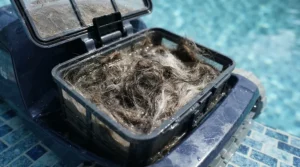
An ultra fine filter earns its keep when water looks hazy after swims, or when fur and silt arrive together. It’s less useful during leaf season, when it clogs in minutes.
Think of it as a seasonal tool. The Aiper Scuba S3 pairs a coarse basket with a 3-micron ultra-fine option, while the Dolphin Nautilus CC Plus Wi-Fi version ships with a 70-micron panel.
Replacement matters too. Retail listings for ultra-fine Dolphin panels suggest rinsing every four to six weeks and claim two to three years of life when properly cared for. Treat those as vendor estimates.
One owner discussion even recommends an ultra-fine panel for dog hair that keeps jamming an impeller. It’s anecdotal, but it fits the physics: finer filters keep hair out of moving parts.
Rule of thumb: run ultra-fine when clarity drops, switch back for heavy debris.
Hair Tangling in Brushes: Why It Happens and How to Prevent It
Hair tangling in brushes is mechanical, not a brand defect. Anything that rotates will wrap long strands, which is why robot-vacuum makers obsess over it too. Their experience offers a useful hint: finned or rubber rollers tend to lift hair with less wrapping than bristle brushes.
In pools, the wrap points are brush ends, drive axles, and the impeller. Owner forum threads describe hair collecting at the impeller in Dolphin robots, which is why a weekly check pays off.
Don’t confuse this with cable tangling. The Dolphin Premier advertises an anti-tangle swivel cable, which stops the power cord twisting, not hair wrapping the brushes. They’re separate problems.
Prevention is simple: pull wrapped strands weekly, keep brushes in good condition, and use finer filters so less hair reaches moving parts. Worn brushes also lose traction, which hurts wall climbing.
Filter Clogging: Why Hair Makes It Worse (and the Fix)
Filter clogging is the quiet killer of robot performance. A saturated filter reduces water flow, and some models stop the cycle entirely when flow drops too low.
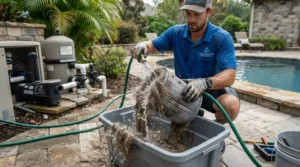
Hair accelerates it, because strands felt together into a dense mat. Manufacturer guidance adds that fabric bags clog faster than rigid baskets, and that a yellowed, stiff bag should be replaced.
Symptoms to watch: weak suction, poor wall climbing, and a robot that stalls mid-cycle. A common first check is the filter, then the impeller.
The fix is a routine plus smart hardware. Rinse after heavy-hair cycles, choose a big rigid basket, and consider automation like the Beatbot AquaSense X‘s rinse station. Never use a pressure washer, since strong spray can damage filter media.
Robotic Cleaners vs Traditional Alternatives for Pet Hair
| Option | How It Handles Hair | Main Drawback | Best For |
|---|---|---|---|
| Robotic cleaner | Internal filter captures hair independently | Higher upfront cost | Frequent swimmers |
| Suction-side cleaner | Sends hair to the pool’s main filter | Clogs the main filter faster | Tight budgets |
| Pressure-side cleaner | Uses a bag; adds a booster pump | Extra component to service | Leaf-heavy pools |
| Manual vacuum or net | Full control | Labor-intensive | Occasional touch-ups |
Robots win for pet owners because they don’t dump hair into the main filter. A suction-side cleaner sends every bit of debris to the pool’s filter, which then clogs sooner and needs more frequent cleaning. Owners who switched from suction-side to robots on pool forums often cite less cartridge cleaning as the biggest win.
The honest caveat: robots won’t fix cloudy chemistry. They clean surfaces, not water balance.
✨ Ready to Stop Fighting Fur? Pick Your Match Today!
🐕 Compare your dog’s shedding level against the products above, then click through to check current pricing and availability. The right robot turns a hairy chore into a set-it-and-forget-it habit.
Pets, Pools, and Safety: What to Know Beyond the Robot
A robot handles hair, not hygiene. Public-health guidance on dogs in public pools warns of zoonotic organisms such as Campylobacter, Salmonella, Cryptosporidium, and Giardia, and recommends following CDC guidance for any fecal incident. See the Iowa public health guidelines on dogs in pools for specifics.
In a private pool, the picture is gentler. A veterinary-parasitology source notes the overall infection risk in a well-maintained pool is probably quite low, though a dog known to be shedding an infectious agent shouldn’t swim. See their discussion of dogs and swimming pools.
Practical steps: keep chlorine and pH in range, rinse your dog before swimming, and follow the CDC’s healthy swimming guidance for any contamination event. Also consider a pool alarm and a safe exit route, since not every dog is a strong swimmer.
FAQ
❓ Can a robotic pool cleaner actually pick up dog hair?
❓ What micron filter is best for pet hair?
❓ Does a cordless robot handle hair better than a corded one?
❓ How often should I clean the filter when my dog swims often?
❓ Will my pool robot clean floating dog hair at the waterline?
Conclusion: Pick the Filter First, Everything Else Second
The best robotic pool cleaner for pets with hair in the pool isn’t the most powerful or the most expensive. It’s the one whose filtration, brushes, and maintenance fit your dog’s shedding and your patience for chores.
On a tight budget, the Aiper Seagull SE is the entry gamble, while the Dolphin Nautilus CC Plus adds real fine filtration for a mid-range price. For mixed fur and silt, the Aiper Scuba S3 brings dual layers, and the Beatbot Sora 30 brings a wide intake for clumps. For heavy shedders, the Dolphin Quantum and Dolphin Premier offer capacity and flexibility, and the Beatbot AquaSense X automates the filter chore.
Whatever you pick, remember the routine: rinse the filter, check the impeller, and match the mesh to the debris. Check current price on any model before you buy, since prices and bundles change.
✨ Your Dog Deserves a Great Swim and You Deserve a Clean Pool!
🏊 Pick the robot that fits your pool and your pup, click through to check current pricing and availability, and get back to enjoying the water.
Recommended for You
- [Add your blog post link 1]
- [Add your blog post link 2]
- [Add your blog post link 3]
Disclaimer: This article contains affiliate links. As an Amazon Associate, I earn from qualifying purchases. If you purchase products through these links, we may earn a small commission at no additional cost to you.
✨ Found this helpful? Share it with your friends! 💬🤗
